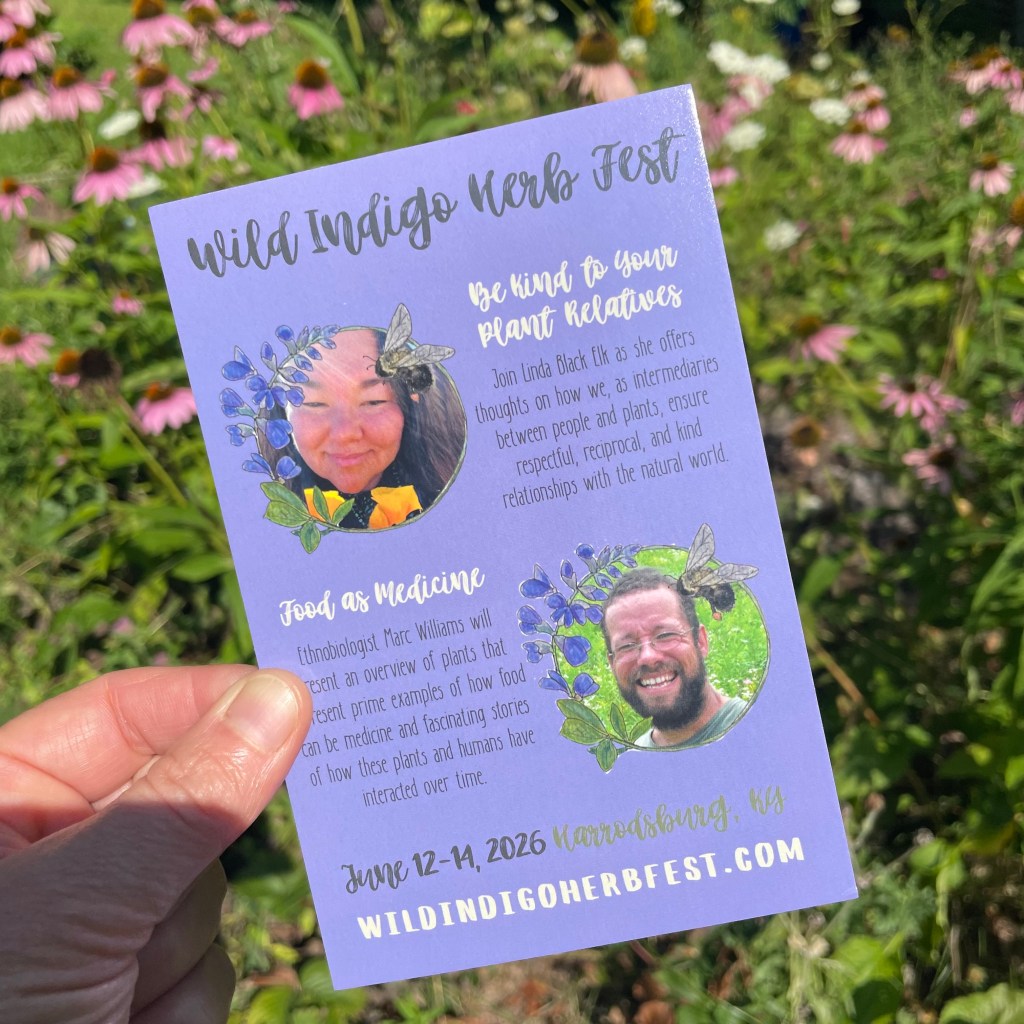
We spent a lot of time thinking about who could best represent our mission of cross-pollination. We chose Linda Black Elk for her advocacy of indigenous rights, the sovereignty of nature, community engagement, and plant education. We chose Marc for his multi-disciplinary work in the complex relationships between people of all color and plants of all kinds.
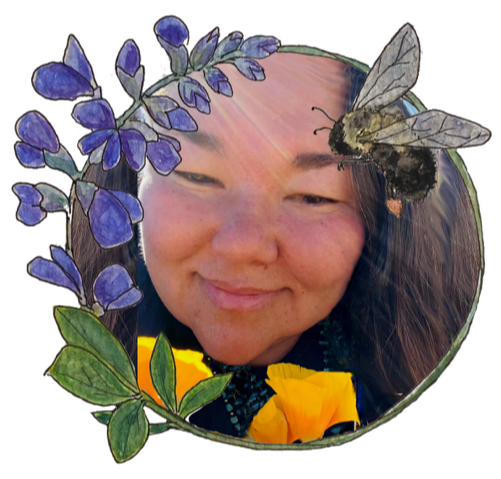
Linda Black Elk
Linda Black Elk is an ethnobotanist and food sovereignty activist specializing in teaching about culturally important plants and ways to build relationships with the natural world. She is eternally grateful for the intergenerational knowledge of elders and other knowledge holders, who have shared their understandings of the world with her, and she has dedicated her life to giving back to these peoples and their communities. Linda works to build ways of thinking that will promote and protect food sovereignty, traditional plant knowledge, and environmental quality as an extension of her work as a gardener, forager, fisher, hunter, and gatherer. Linda and her family spearhead a grassroots effort to provide organic, traditional, shelf stable food and traditional Indigenous medicines to elders and others in need. Thus far, they have fed and healed thousands of people through their advocacy. Linda has written numerous articles, book chapters, and papers, and is the author of “Watoto Unyutapi”, a field guide to edible wild plants of the Dakota people, which is now out of print. Linda proudly serves as the Director of Education at NATIFS, a Native-led nonprofit in Minneapolis, Minnesota. She also sits on the board of Makoce Ikikcupi, a Reparative Justice project on Dakota lands in Mnisota Makoce. When she isn’t teaching, Linda spends her time living in a traditional Dakota earthlodge while foraging, hiking, hunting, and fishing on the prairies, woodlands, and waters of Turtle Island with her husband and three sons, who are all members of the Oceti Sakowin – the Seven Council Fires of the Lakota.
Linda’s Keynote Address: Be Kind to Your Plant Relatives
As plant people, we often rely on the Powers of Plants to feed and heal others. While many plant people are extremely skilled and knowledgeable, and some even possess “medicine” of their own, herbalism is less about our own personal power and more about the medicine, energy, and powers of plants. This can often result in a one-sided transaction in which plants are exploited and even harmed. How do we, as intermediaries between people and plants, ensure respectful, reciprocal, and kind relationships with the natural world? Join Linda Black Elk as she offers some thoughts and tips for being kind to our plant relatives.

Marc Williams
Ethnobiologist Marc Williams has studied the people, plant, mushroom and microbe interconnection intensively while learning to employ botanicals and other life forms for food, medicine, and beauty in a regenerative manner. His training includes a Bachelor’s degree in Environmental Studies concentrating in Sustainable Agriculture with a minor in Business from Warren Wilson College and a Master’s degree in Appalachian Studies concentrating in Sustainable Development with a minor in Geography and Planning from Appalachian State University. He has spent over two decades working at a multitude of restaurants and various farms and has traveled throughout 30 countries in Central/North/South America and Europe as well as all 50 states of the USA. Marc has visited over 200 botanical gardens and research institutions during this process while taking tens of thousands of pictures of representative plants and other entities. He has taught hundreds of classes to thousands of students about the marvelous world of people and their interface with other organisms while working with over 100 organizations and particularly as a key contributor to the work of United Plant Savers, Plants and Healers International and online at the website http://www.botanyeveryday.com. Marc’s greatest hope is that this effort may help improve our current challenging global ecological situation.
Marc’s Keynote Address: Food as Medicine
Food as medicine is a concept that is rooted in healing systems from all over the world. It is well known that various compounds such as antioxidants and some bitters are helpful in promoting overall health and well-being. Classes of plants, such as adaptogens, make up a large part of the current superfood trends in our society. Ethnobiologist Marc Williams will present an overview of plants that represent prime examples of how food can be medicine, as well as some fascinating stories of how these plants and humans have interacted over time.
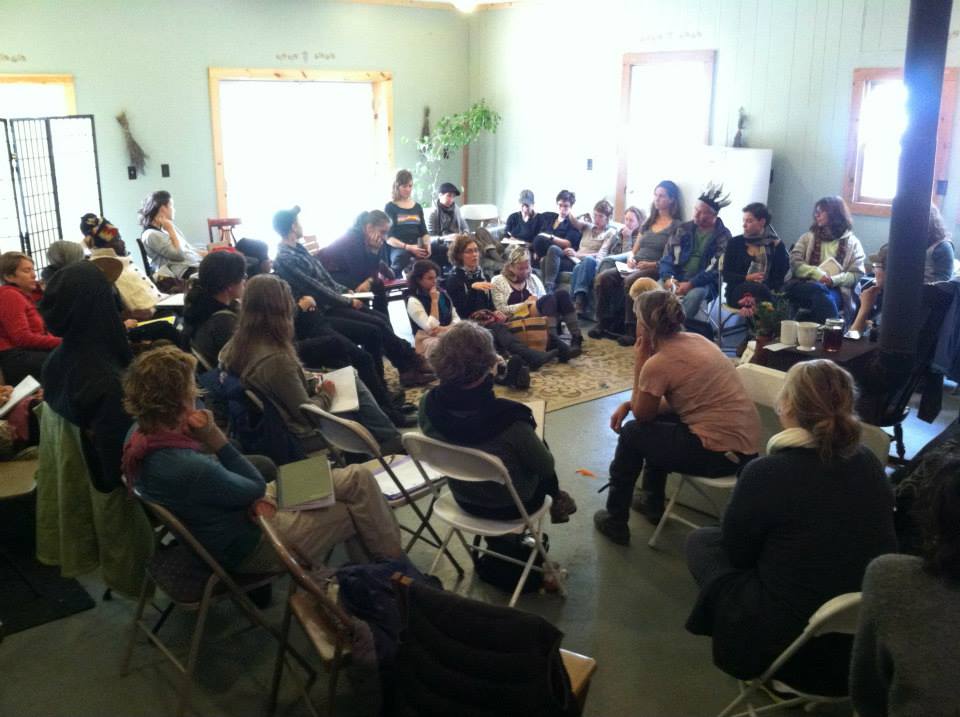
Interested in presenting? Send us a proposal.
We are especially interested in cross-disciplinary topics, community herbalism, regional herbalism, and presentations for young people.
